Pages

Saturday, May 14, 2016

Loan guarantees falsified by BSP to save bank, says Arkhangelsky

Bank St Petersburg (BSP) forged personal loan guarantees or forced Vitaly Arkhangelsky to sign them in December 2008 because it was in danger of having insufficient reserves to keep operating, Arkhangelsky claimed in evidence he gave in Paris.


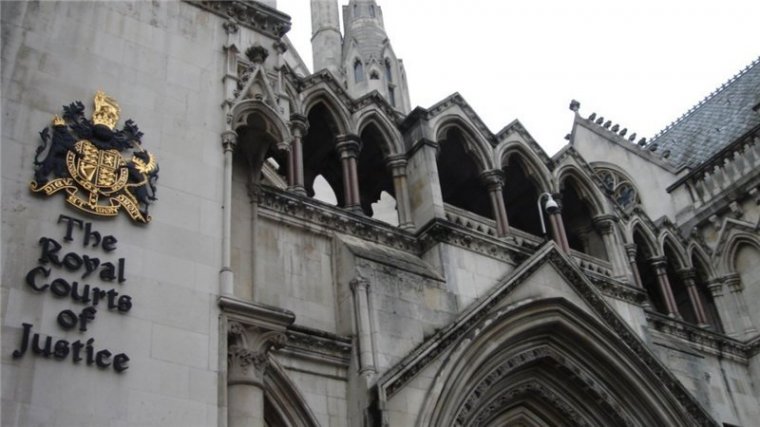
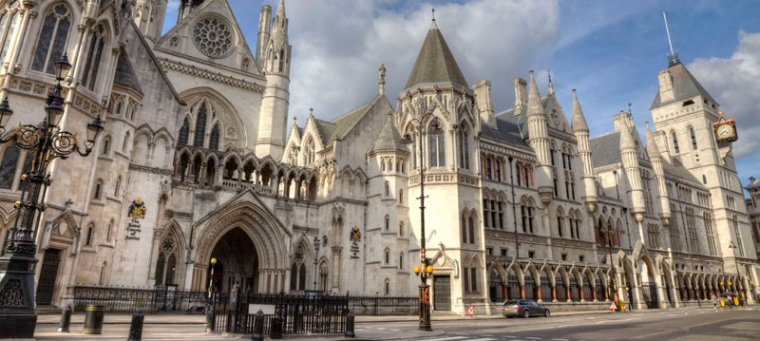
The Russian businessman is being sued in the London High Court by BSP, which claims Arkhangelsky and his wife, Julia, did not pay back personal guarantees and loans made to Oslo Marine Group (OMG) companies amounting to nearly RUB 1.8bn. It denies Arkhangelsky’s counter-allegations that the bank unlawfully appropriated assets.

Arkhangelsky, who fled to Bulgaria in June 2009 and then France, says he met BSP chairman Alexander Savelyev for the first time on 25 December 2008 to discuss cash-flow problems at companies within OMG caused by the developing financial crisis. It meant they would default on loans at the end of the year.

He claimed at the hearings, held in Paris as he is unable to leave France, that the situation was double-sided. He said that if OMG defaulted the bank would have to go to arbitration and then litigation that would last years.

“But for them, it was immediate trouble with the Central Bank and their accountancy. So for them, it was much more stronger problem than with me,” Arkhangelsky alleged — adding that the bank faced similar problems with many clients but loans to OMG made up 4% of its whole loan portfolio.

“So for them, default on 4% of their loans was nearly — they could lose their licence, so they can cease their operations.”

Acting for the bank, Brick Court Chambers silk Tim Lord asked Arkhangelsky if he agreed he was entering into repurchase agreements to give BSP further security over loans to OMG. He answered: “They were proposing, and it was agreed, that we have a moratorium up to the end of June 2009, yes, on all the loans.”

But Arkhangelsky claims that on 30 December, BSP only gave him sale agreements and not those allowing him to buy back shares in his companies at a nominal price. The process was rushed to meet an end-of-year deadline, and Arkhangelsky said he did not have time to consult lawyers.

Lord asked: “I suggest that at that meeting there were no threats made against you.”

Arkhangelsky replied: “No, it was a really terrible meeting, and your Lordship would understand that when you have three bodyguards with this person, with the gangs and so on, so you understand that he’s a serious man and he has a reputation.”

Arkhangelsky claims many documents, purporting to be personal loan guarantees or sales, shown in evidence by the bank have been falsified or his signature has been forged on them.

OMG’s value was about EUR 1bn ($1.11bn) in late 2008, Arkhangelsky claims, when it was approaching various finance groups and banks — including the European Bank for Reconstruction and Development (EBRD) and KIT Finance — to raise funds of about $600m to restructure loans and develop terminals.

‘Shares transferred’

The court heard that OMG had paid RUB 1.06bn to Premina Ltd for Western Terminal but the shares were transferred by BSP for RUB 9,900 to a firm called Sevzapalians — which Arkhangelsky claims is related to the bank.

Asking about payments by OMG companies to an unidentified firm called City Centre, Lord said: “The most likely explanation for those entries is that those monies, totalling $80m, were transferred to or for your benefit or that of your wife.” Arkhangelsky denies this.

When promotional videos of OMG port developments were shown by Arkhangelsky, Judge Justice Hildyard commented about photos shown by BSP early in the trial showing terminals to be undeveloped, that the bank’s evidence had “been corrected to the extent that the videos and the photographs you have provided me have corrected it”.

The case continues.

Paul Berrill 
www.tradewindsnews.com

via: http://sovetnik.eu/loan-guarantees-falsified-by-bsp-to-save-bank-says-arkhangelsky.html

Thursday, April 28, 2016

Trail of transactions alleged to link bank to Renord entities

A chain of transactions was used to transfer Oslo Marine Group (OMG) assets to firms owned by a former senior manager of Bank St Petersburg (BSP), it was alleged in the London High Court.


The case involves claims by BSP that OMG owner Vitaly Arkhangelsky is liable for $90m in loan guarantees that he defaulted on, while the Russian businessman is counter claiming for damages of $500m — alleging the bank illegally appropriated OMG assets in 2009.

Many of the assets were acquired by companies within the Renord Invest group, mainly owned by Mikhail Smirnov, a former director of BSP.

Arkhangelsky’s representative in court, Pavel Stroilov, alleged that a series of transactions involving assets of OMG company Western Terminal were designed to ensure they ended up in the hands of Baltic Fuel Company, in which Smirnov has a shareholding.

Stroilov asked Elena Yatvetsky, a lawyer who worked for Renord, about the chain involving half-a-dozen of its firms.

“Assuming that Renord was interested in this asset from the start, this long chain of transactions makes perfect sense as a plan to acquire those assets. Wouldn’t you agree with that,” Stroilov asked. Yatvetsky said she disagreed.

An auction process for another OMG asset, the Onega Terminal, was “rather odd”, Stroilov alleged, as it involved another series of links involving BSP, Scan, a company held and managed by Renord on behalf of the bank, the Russian Auction House as the bank’s agent and two bidders, as required by law, both controlled by Renord.

Yatvetsky replied: “I don’t think it’s odd in any way, because the bank is the creditor and had a defaulting borrower, they entered into an extrajudicial enforcement agreement, the bank used the services of an independent auctioneer, Russian Auction House, the auction was conducted, Mr Smirnov decided to bid, and in the course of a public sale he purchased these properties.”

Stroilov later asked if Renord was mainly run by former BSP employees or people otherwise connected with the bank?

Yatvetsky answered: “Yes, some of the company management used to work in Bank of St Petersburg, but they also used to work with Mr Smirnov in AVK company. It is a common occurrence [in Russia] when one of the managers from a group is changing jobs and moves to another company or creates his own business, usually the backbone of his staff moves along with him.”

Commenting on a lack of documentation about Renord’s dealings with BSP, Stroilov said there appeared to be a remarkable similarity between the way in which Renord was organised — where everything was built on trust of employees who held companies for it and nothing was put in writing — and the group’s relationship with BSP. “The bank trusts Renord quite unreservedly; isn’t that right?”

Yatvetsky answered: “Correct. This happens often in Russian business, because business in Russia, comparing to other countries, is fairly recent, and our legislation is not perfect.”

Stroilov further questioned a conflict of interests in a normal commercial environment between Renord wanting to acquire assets for as low a price as possible, and its role acting for BSP.

“I don’t see any conflict of interest here,” replied Yatvetsky. “The bank has always pursued the goal to sell the assets at the maximum price, and the price that was generated at the time was in fact the maximum price. Mr Smirnov could not dictate terms to the bank.”

The court has earlier heard that assets were sold at much lower prices than they were originally purchased for before the financial crash of 2008.

Stroilov further alleged: “Renord is no more than a collective name for various companies which are beneficially owned by the bank and/or by the bank’s top managers, through various nominees?

“No. Renord is an independent business, owned by Mr Smirnov,” Yatvetsky countered.

The case continues.

Paul Berrill
www.tradewindsnews.com

via: http://sovetnik.eu/trail-of-transactions-alleged-to-link-bank-to-renord-entities.html

Tuesday, April 12, 2016

Sergei Guriev: Bank of St. Petersburg Tried to Deceive Regulator, Shareholders and Market

Justice Hildyard of the High Court of England and Wales continues proceedings on suit of Bank St. Petersburg vs Russian businessman Vitaly Arkhangelsky and Arkhangelsky's counterclaim against the bank.


On Monday, April 11, the banking expert for Arkhangelsky, Professor of economics Sergei Guriev, was cross-examined.

In 2008-14, he was a member of the boards in a number of Russian financial institutions including Sberbank, Russian Agricultural Bank and Russia Venture Company. He was also an economic advisor for Russia's government.

In 2011, Guriev was one of the experts who had to evaluate the 2010 verdict on the case of Mikhail Khodorkovsky and Platon Lebedev (so called “second Yukos case”). He, like the other eight experts, concluded that the court failed to establish the guilt of Khodorkovsky and Lebedev. That resulted in the Russian Investigative Committee launching the campaign of harassment against those experts. The pressure forced Guriev to leave Russia. In September 2016, he will start working as the chief economist for the European Bank for Reconstruction and Development.

In the course of the cross-examination, Guriev told the court that he found a number of irregularities in the Bank of St. Petersburg behaviour with regards of the OMG case. He stressed that some features of December 2008 arrangement between the Bank and OMG "made it not only irregular, but clearly improper".

The agreement between the Bank and OMG was the "highly unusual memorandum" rather than a written contract. With the loans secured by registered pledges of real estate the reason for requiring a transfer of OMG companies' shares as an additional security seems "unclear", Guriev pointed out.

In the repo transaction the assets were transferred not to the Bank or its subsidiary, but to a number of companies which were not directly controlled by the Bank, the Original or Subsequent Purchasers that were mostly subsidiaries of Renord-Invest. The co-founder of that group was Vladimir Malyshev, the husband of BSP deputy chair Irina Malysheva. Guriev noted that no usual safeguards for transactions with affiliated parties were applied. He described the arrangement between the Bank and Renord-Invest as “intentionally non-transparent”. The Bank present and former managers' evidence suggests that such tactics were used to "deceive the regulator, the shareholders and the market", Guriev said.

* * *

The bank claims that Arkhangelsky, who, together with his family, left Russia in 2009 and was granted political asylum in France, did not settle with creditors and tries to recover a debt.

Archangelsky in his statement of claim says that during the global financial crisis the bank agreed to defer payment on loans for six months. As a collateral, the bank demanded Archangelsky to transfer the shares of companies that were a part of his Oslo Marine Group - West Terminal port complex and Scandinavia insurance company, the owner of a half of Onega terminal. Before the stipulated term expired, the bank demanded loan repayment and later used its political contacts including top law enforcement officers and St. Petersburg Governor Valentina Matvienko, sold the shares to a sister firm at a lower price and changed the executive of Arkhangelsky's companies. He estimates the damages at $500 million.

via: http://sovetnik.eu/sergei-guriev-bank-of-st.-petersburg-tried-to-deceive-regulator-shareholders-and-market.html

Monday, March 28, 2016

Savelyev: Nobody Forced Archangelsky to Transfer Assets

Justice Hildyard of the High Court of England and Wales continues proceedings on suit of Bank St. Petersburg vs Russian businessman Vitaly Arkhangelsky and Arkhangelsky's counterclaim against the bank.


On Monday, March 21, four-day cross-examination of the former chairman of the Bank's board Alexander Savelyev was finished.

One of the focal points of the cross-examination was the sale of Arkhangelsky's OMG assets. Savelyev denied that in December 2008, they reached an agreement on the restructuring of the Group's debts and a six-month moratorium on payments due to the Bank. "I do not remember any such agreement," Savelyev said. "I do not believe that there was any agreement. In any case such agreement would have required the ratification of the Bank Management Board."

Arkhangelsky's representative suggested that the parties reached a preliminary agreement on a moratorium, and Savelyev promised to settle all the formalities. Otherwise, Arkhangelsky's decision to increase the collateral for the OMG loans transferring to the Bank the shares of Scandinavia insurance company and the Western Terminal seems illogical. Savelyev reiterated that he "did not force Arkhangelsky" to transfer the shares for the subsequent repo transaction.

After the board meeting, in late December 2008, the parties signed a memorandum with regard of the repo transaction. The deal included the possibility of buy-back after OMG fulfilled its obligations to the bank. The assets were sold at auctions and bought by Solo, Mercury and Contour companies linked to either the BSP or Renord Group. One of Renord divisions, the Renord-Invest, worked at one of the BSP offices.

Answering the questions about the assets sale price that was significantly lower than the market prices Savelyev cited the lack of liquidity during the global financial crisis, when "no one was buying any assets." He called a "miracle" the fact that the Bank managed to sell them and receive some money.

Some OMG assets were sold through the Russian auction house whose director Andrey Stepanenko who worked at Valentina Matvienko's administration. According to Arkhangelsky, Stepanenko told him that Matvienko personally asked to arrange the sale. Savelyev flatly denied that saying that Matvienko was a "serious politician" who had never been interested in commercial projects.

via sovetnik.eu

Friday, March 25, 2016

Bank of Saint Petersburg Named Its Friends and Relatives

Justice Hildyard of the High Court of England and Wales continues proceedings on suit of Bank St. Petersburg vs Russian businessman Vitaly Arkhangelsky and Arkhangelsky's counterclaim against the bank.


On Monday, March 21, four-day cross-examination of the former chairman of the Bank's board Alexander Savelyev was finished. Savelyev, who headed the bank in 2001-14 he told the court that it was a period of the Bank's rapid growth at the rate of up to 100% a year. For the most part of that period the governor of St. Petersburg was Valentina Matvienko who headed the region in 2003-11.

Answering the questions of Arkhangelsky's representative, admitted that Matvienko was one of his old friends and they had event been business partners. Together they found KomAvtoServis Company. However, he stressed that they were the business partners for "very short time" before he came to the bank in 2001.

Savelyev called a "coincidence" the Bank's rapid growth in the time of Valentina Matvienko's governorship. He flatly denied Arkhangelsky representative's suggestion that the Bank used its contacts in the city administration to receive the exclusive access to St Petersburg subway databases that contributed to the BSP's success in the Visa card market in the city. Savelyev stressed that the bank's success was only the result of "hard work".

* * *

When she served as the governor, Matvienko's son Sergey was invited to the Bank of Saint-Petersburg to take a vice-president position. According to Saveliev, Matvienko Jr. was responsible for installation of computer hardware and the Bahkir software bought for "a lot of money" by the bank that made nothing of them. Asked by Justice Hildyard about Sergei Matvienko's contribution to bank's development, Savelyev admitted that the new vice-president had to take software from the warehouse and install it on the existing hardware. Savelyev, however, pointed out that nobody could manage it before Sergey Matvienko and his team of "IT-experts" arrived in the bank. Answering Justice Hildyard's question whether Sergey Matvienko's team was selected at a tender of any kind Savelyev said the bank had no time to arrange any competition.

Inviting Sergey Matvienko to join the bank, the BSP offered him a shareholding as a reward for installing software. Answering Justice Hildyard's question who calculated the size of Matvienko's share against the value of the work performed, Savelyev said the BSP at that time was loss making and the share transfer was just a "gesture." According to him, Valentina Matvienko was not involved in that decision.

Until 2006, Matvienko Jr. owned 5% to 8% of shares. After several additional issues his shareholding was diluted and reduced to 3%, and he gave the shares to his father Vladimir Matvienko. Savelyev pointed out that was a gift as Sergey Matvienko is a "good son" who takes care of his parents. He denied that father and son had always been nominees while the actual shareholder of the bank was Valentina Matvienko.

* * *

Savelyev, who now heads the BSP supervisory board, answering Arkhangelsky representative's questions, admitted that Sergey Serdyukov who owns 5.45% of the Bank shares is the son of former Russian defence minister Anatoly Serdyukov who resigned in 2012, after a notorious corruption scandal. Savelyev said he know the former minister personally as the latter earlier headed St Petersburg tax administration.

Since 2005, one of BSP shareholders has been Valery Puzikov, Anatoly Serdyukov's brother-in-law also involved in the corruption scandal in 2012.

Savelyev denied that Sergei Serdyukov and Valery Puzikov are Anatoly Serdyukov's nominee shareholders in the Bank.

* * *

Saveliev and the Bank top managers formally control 53.15% stake in the BSP. Savelyev holds 23.7% of those shares. The executives mainly own their shares through the Vernye Druziya (Loyal Friends) management company. Through an offshore entity, a shareholder holding 19.95% stake in that company is Oksana Saveliev, the daughter of Alexander Saveliev. This is the official information posted on the bank's website.

Answering Arkhangelsky representative's questions, Saveliev admitted that the management company was established with the only purpose to control the bank's shares in his behalf. He told the court that his daughter received the shares in 2015, and he financed the purchase as she is a medical doctor and he has still given her a kind of financial support. He expressed hope that Oksana Saveliev and Vernye Druziya would control the Bank in the future.

The bank claims that Arkhangelsky, who, together with his family, left Russia in 2009 and was granted political asylum in France, did not settle with creditors and tries to recover a debt.

* * *

Archangelsky in his statement of claim says that during the global financial crisis the bank agreed to defer payment on loans for six months. As a collateral, the bank demanded Archangelsky to transfer the shares of companies that were a part of his Oslo Marine Group - West Terminal port complex and Scandinavia insurance company, the owner of a half of Onega terminal. Before the stipulated term expired, the bank demanded loan repayment and later used its political contacts including top law enforcement officers and St. Petersburg Governor Valentina Matvienko, sold the shares to a sister firm at a lower price and changed the executive of Arkhangelsky's companies. He estimates the damages at $500 million.

The course of the trial will be covered by the press-office.
Contact: Natalia Khmelik natalya.hmelik@gmail.com

Wednesday, March 23, 2016

Bank of Saint Petersburg Reluctantly Revealed Its Connection with Valentina Matvienko

Justice Hildyard of the High Court of England and Wales continues proceedings on suit of Bank St. Petersburg vs Russian businessmanVitaly Arkhangelsky and Arkhangelsky's counterclaim against the bank. 

22 march / via sovetnik.eu

Last week, Alexander Saveliev, of the former chairman of the Bank's board, was cross-examined for three days. Answering the questions of Arkhangelsky's representative, he told the court that he was the CEO in 2001-14, and it was a period of the Bank's rapid growth at the rate of up to 100% a year.For most part of that period, in 2003-11, the governor of St Petersburg was Valentina Matvienko.

Savelyev admitted that Matvienko was one of his old friends. Together they founded the KomAvtoServis Company and were business partners for "very short time" before he came to the bank in 2001.

When Mrs Matvienko served as the governor, her son Sergeiwas a vice-president of the Bank responsible for the installation of hardware and the Bankir software. At the same time Sergey Matvienko was aBSP significant shareholder. Savelyev explained that the shares were promise to Sergei Matvienko when he was invited to join the Bank. It was a kind of reward for implementation of the Bankirsoftware. Until 2006, he held 5%-8% of the BSP shares. After several issues his shareholding was diluted and reduced to 3%. Then he passed the shares to his father Vladimir Matvienko.

Savelyev pointed out that "Vladimir Matvienko received those shares as a gift from his son", a good son who takes care of his parents.He denied the son was and the father still is a nominee while the actual shareholder of the bank has been Valentina Matvienko.

Savelyev admitted that he and Sergey Matvienko were partners in a number of business projects, but he could not recall the names of those projects.

Savelyev called a "coincidence" the BSP's rapid development in the time of Valentina Matvienko's governorship. He denied her involvement in the Bank's business. He stressed that the BSP's success was a result of hard work rather that the city administration's benevolence.

Savelyev, who now heads the Bank's supervisory board,also answered questions about the BSP's connections with the family of the former Defense Minister Anatoly Serdyukov.

 * * *

The bank claims that Arkhangelsky, who, together with his family, left Russia in 2009 and was granted political asylum in France, did not settle with creditors and tries to recover a debt. 

Archangelsky in his statement of claim says that during the global financial crisis the bank agreed to defer payment on loans for six months. As a collateral, the bank demanded Archangelsky to transfer the shares of companies that were a part of his Oslo Marine Group - West Terminal port complex and Scandinavia insurance company, the owner of a half of Onega terminal. Before the stipulated term expired, the bank demanded loan repayment and later used its political contacts including top law enforcement officers and St. Petersburg Governor Valentina Matvienko, sold the shares to a sister firm at a lower price and changed the executive of Arkhangelsky's companies. He estimates the damages at $500 million.

The course of the trial will be covered by the press-office.
Contact: Natalia Khmelik natalya.hmelik@gmail.com

Wednesday, March 16, 2016

Head of SKIF Company Told About Work on "OMG Project"

Justice Hildyard of the High Court of England and Wales continues proceedings on suit of Bank St. Petersburg vs Russian businessman Vitaly Arkhangelsky and Arkhangelsky's counterclaim against the bank.


The witness told the court that back in 2009, Bank of Saint-Petersburg was one of the largest clients of his company. Early in that year the deputy chairman of the bank's board Irina Malysheva invited Sklyarevsky and the owner of Renord-Invest Mikhail Smirnov to the meeting and informed them that Arkhangelsky's OMG was a troubled debtor. According to Sklyarevsky, Malysheva instructed him and Smirnov to do whatever was necessary to replace the management of Scandinavia Insurance Company and the Western Terminal.

The change of both companies' management happened on April 7 2009. It is unclear whether every stakeholder received notification of upcoming conferences timely but Sklyarevsky admitted the Renord's lawyers could backdate them. He, however, stressed that it was not of great importance, as Renord owned 100 per cent in the Scandinavia. while the Sevzapalyas, one of Renord companies, was the owner of 99 per cent in the Western Terminal. After the change of management the both companies were transferred between different owners within Renord and ended up under the control of the group's offshore entities. Sklyarevsky explained, the bank and its partners in OMG project tried to protect themselves from Arkhangelsky's claims for recognition of transactions with his companies null and void. The claims actually followed and Arkhangelsky won the cases in the courts of the first and second instances. However, at the federal level those courts' decisions were overturned, presumably after Valentina Matvienko's interference.

Sklyarevsky denies that working on "OMG Project" he received confidential information about Arkhangelsky's group from Alexei Berezin, an OMG financial manager and his old friend.

"We are not Mafia"


Sklyarevsky's friends draw special attention of the court. Answering Arkhangelsky representative's questions the witness told that before founding SKIF he, in 1996-2006, worked for the AVK Group that included the AVK-Securities Company. His colleagues at the time were Irina Malyshev, Mikhail Smirnov, Alexei Berezin, the present Renord COO Dmitry Gubko, the present Bank of Saint-Petersburg press secretary Anna Barkhatova, and many other present Bank's employees.

AVK was founded in 1990 by Igor Kostikov, who in 2000 was appointed the chairman of the Federal Commission on Financial Markets. At that actually ministerial position Kostikov initiated the revocation of licenses of many AVK's competitors. Another Kostikov's reform was a requirement that issue of any securities on the market could only be done with the approval of a financial consultant. One of the largest consulting companies in the sector was AVK, and for some time the group blossomed. The court was told that back then about 80 per cent of financial consulting market in Russia was under control of only two companies - AVK and Federal Fund Corporation (FFK) associated with Alexander Voloshin who until October 2003 headed Russian President's administration. Arkhangelsky's representative suggested that AVK was Kostikov's corruption scheme, but Sklyarevsky denied it and stressed that before leaving for the government Kostikov sold his AVK shares and had no formal link to the group.

Once Kostikov was out of office the requirement of mandatory financial consulting was abandoned and business collapsed. A number of the group op managers now work at Bank of Saint Petersburg. Sklyarevsky stressed that former colleagues "trust each other, because we have been through a lot together".

"I am sorry to put it a little crudely, but you guys are a bit of a mafia, aren't you?" Arkhangelsky's representative said.

"No, we are not mafia," Sklyarevsky answered. "Do you understand mafia meaning family, as translated from Italian? We are definitely not family."

"We Aren't Raiders, They Aren't Financiers"

Arkhangelsky's representative showed Sklyarevsky a piece of report on raiding prepared by Russian National Anti-Corruption Committee. Its authors researched a large number of cases typical schemes of raiding in Russia. Arkhangelsky's case perfectly fits in one of those schemes. Sklyarevsky pointed out that although the report authors were well-known and reputable people none of them was a financier. He flatly denied his involvement in raiding.

"I worked bona fide in the financial markets," he stressed.

* * *
The bank claims that Arkhangelsky, who, together with his family, left Russia in 2009 and was granted political asylum in France, did not settle with creditors and tries to recover a debt.

Archangelsky in his statement of claim says that during the global financial crisis the bank agreed to defer payment on loans for six months. As a collateral, the bank demanded Archangelsky to transfer the shares of companies that were a part of his Oslo Marine Group - West Terminal port complex and Scandinavia insurance company, the owner of a half of Onega terminal. Before the stipulated term expired, the bank demanded loan repayment and later used its political contacts including top law enforcement officers and St. Petersburg Governor Valentina Matvienko, sold the shares to a sister firm at a lower price and changed the executive of Arkhangelsky's companies. He estimates the damages at $500 million.
----------
The course of the trial will be covered by the press-office.
Contact: Natalia Khmelik natalya.hmelik@gmail.com


Transcripts are available at: http://www.rpc.co.uk/index.php?option=com_flexicontent&view=category&cid=660%3Absp-v-arkhangelsky-transcripts&Itemid=27 

Friday, March 11, 2016

Arkhangelsky trial hears of ‘inconsistent’ testimony

The London trial in which Bank St Petersburg (BSP) is claiming Oslo Marine Group (OMG) chief executive Vitaly Arkhangelsky is liable for loan guarantees, and the Russian businessman is counter claiming for damages, has heard about inconsistencies in evidence given by bank witnesses.


In the second week of the trial, executives of the bank denied taking actions that led to BSP selling cheaply shares in OMG companies — which it had taken as collateral for deferred loans — to associated companies before their terms expired. The sales were made in 2009 after OMG ran into trouble following the financial crash of 2008.

 Questioned about a 25 December 2008 meeting between then chairman of BSP’s management board Alexander Savelyev and Arkhangelsky, Savelyev’s deputy Vladislav Guz denied the agreement to transfer the shares under a ‘repo’ (repossession) agreement was a strange move.

 “I don’t think it would be strange, because according to this transfer, he would have got all his shares back after repayment of the debt, and I think that was his only opportunity to restructure the loan,” Guz said.

 By March 2009, BSP believed OMG had no real prospects of returning to solvency, Guz added. 

Arkhangelsky’s legal representative Pavel Stroilov asked why specific terms of the restructuring were not agreed at the December meeting.

 “There was a maturity date for some of the loans in the amount of a few hundred million roubles, in case there was no agreement about any restructuring, the default would happen in the end of 2008,” Guz responded.

 But in separate questioning, Tatyana Stalevskaya, a senior manager at BSP’s corporate finance department until November 2010, agreed that her witness statement did not concur with evidence given by other executives.

 Stalevskaya, who was responsible for drafting the memorandum of agreements between BSP and Arkhangelsky as a safeguard for the bank’s loans, agreed that documents shown in court did not accord with statements made by her senior manager Irina Malysheva, who oversaw the corporate finance unit.

 “If to evaluate the information that I can see here, considering what I know, yes, this is not true; this does not accord with what I know, because I know that a memorandum has been signed, and the repo transaction has been signed about the separate sale of Western Terminal as a separate asset, that was never discussed, at least it is not something I know,” Stalevskaya said. 

 Later Stroilov claimed: “In the evidence of these six witnesses, which you have looked through, all of it tells the same lie, doesn’t it?”

 Stalevskaya answered: “The background, the history of the purchase of the shares in this evidence is not consistent with the knowledge that I have now, sitting here today, and it only shows the first component of the repo transaction without referring to the second component, which had been agreed upon, ie the repurchase of the shares in the event that Mr Arkhangelsky complied with his part of the deal, ie the obligations that he had assumed under the memorandum.” 

 Shares in the OMG companies, including terminals in St Petersburg, were sold to firms that were part of Renord-Invest, a company owned by a former BSP employee, Mikhail Smirnov. BSP argues that it needed to sell the shares in repo deals to an independent partner company to prevent them being consolidated into its balance sheet for reporting purposes.

 The case moved to Paris in its third week to hear evidence from Arkhangelsky in sessions for which public transcripts have not been made available. The case, which is expected to last for 12 weeks, continues.

 via TradeWinds - 25th February 
Paul Berrill, London

Gloves off as BSP and Arkhangelsky trade London blows

Bank St Petersburg claims the Oslo Marine Group chief executive is liable for $90m in loan guarantees, while the Russian hits back with action for $500m in damages.


A London trial has got underway in which Bank St Petersburg (BSP) is claiming Oslo Marine Group (OMG) chief executive Vitaly Arkhangelsky is liable for $90m in loan guarantees, while the Russian businessman is counter claiming for damages of $500m.

BSP has frozen Arkhangelsky’s assets and is pursuing a lawsuit that claims he misappropriated funds after OMG ran into cash-flow problems arising from the global credit crunch in 2008.

Arkhangelsky alleges the bank sold cut-price shares in OMG firms it had taken as collateral for deferred loans before their term expired.

He claims the Russian bank sold the shares in West Terminal port and Scandinavia Insurance, which owned half of the Onega terminal, to an outfit connected to the bank at a lower price than their value.

In 2009, Arkhangelsky fled Russia for political exile in France and says he is unable to leave the country. He is represented at the UK High Court by a layman, Pavel Stroilov, who is a Russian political exile with an English law degree.

An order for BSP freezing some $70m of his assets remains in place.

In early exchanges, Stroilov sought to argue that the bank conspired to defraud Arkhangelsky.

But High Court judge Justice Hildyard told Stroilov he would have to prove individuals at the bank were involved in a conspiracy.

“Your case is that Mr Savelyev and Mrs Maylsheva got together and decided to rip you off, and they were in a position not only to agree that, but to implement their agreement because of the positions they held in the bank,” Hildyard said. “You must show they agreed that. And you must then show how they implemented that.” 

Alexander Savelyev is the chairman of BSP and Irina Maylsheva is an ex-senior executive of the bank.

Acting for BSP, British lawyer Tim Lord argued OMG outfit Scandinavia Insurance transferred funds to a company called City Centre — claiming figures of RUB 950m ($12.2m) in 2008 and RUB 725m in 2009.

Lord said Arkhangelsky, who claims no knowledge of City Centre, was the director-general of LPK Scandinavia, although it appears that role passed to his mother-in-law.

“We have had no satisfactory explanation to why City Centre, a company we can’t identify — we can’t track it down — seems to have been the beneficiary of money from LPK Scandinavia, PetroLes and the Scandinavia insurers,” Lord said.

In cross examination of Andrei Belykh, a director of a department at BSP dealing with branches and clients, Stroilov raised the issue of a bank proposal to lease the real estate in Western Terminal and pledge it to a British Virgin Islands company called Gunard Enterprises Ltd.

The 49-year lease provided for a rent of $200,000 plus VAT to be paid at its expiration, which Hildyard said would “mean the value of the land would be enormously reduced” as he sought to clarify the line of questioning.

In a discussion about bank reports on a loan to OMG unit Vyborg Shipping, Elena Blinova, the BSP executive dealing with problem debts, was questioned about the authenticity of duplicate documents with her signature, “which purport to be the same document”.

Stroilov claims there are up to 170 duplicate documents with or without signatures.

“I don’t think that either of them is a forgery,” Blinova responded, adding she may have altered reports if a mistake had been made but the older versions might not have been destroyed before the loan file was passed to the bank’s client monitoring directorate. 

Stroilov said: “I’m not for the moment suggesting that you personally were part of the fraud but I am saying that some of your superiors, from whom this instruction came, were dishonest.”

Blinova replied: “I have nothing to say about that. I know nothing about it.”

The case, which is expected to last for 12 weeks, continues.

(c) TradeWinds | 05 February 2016

Monday, November 25, 2013

Arkhangelsky gets go-ahead to launch fraud counterclaims

A UK judge has ruled that Vitaly Arkhangelsky can fight back against  Russian  lender  the  Bank  of  St Petersburg


Friday, August 2, 2013

Sei in: Il Fatto Quotidiano > Mondo > Caso Ablyazov, ... Caso Ablyazov, luci e ombre di un dissidente e l’imbarazzo della Francia


L'oligarca kazaco non avrebbe voluto ascoltare i consigli di Vitaly Arkhangelskij, finanziere russo in esilio a Nizza e così sarebbe stato arrestato. La Francia dopo aver negato la cattura, ha confermato la "detenzione provvisoria"

Mukhtar Ablyazov poteva evitare la prigione, e non correre il rischio di essere estradato in Ucraina e poi in Kazakistan. Qualcuno, infatti, lo avrebbe potuto avvisare per tempo, in modo da sfuggire al blitz delle forze speciali francesi. Ma l’oligarca kazako dissidente non ha voluto ascoltare i consigli di Vitaly Arkhangelskij, un finanziere russo in esilio a Nizza che gli aveva offerto i suoi servigi pochi giorni fa, e soprattutto le sue ramificate conoscenze locali. Il finanziere, che è in lotta da anni con una potente holding di San Pietroburgo di cui era stato presidente e direttore generale, era stato arrestato in una situazione simile, perché lo volevano incarcerare in Russia: è riuscito a ottenere una sentenza della Corte d’appello (sempre ad Aix-en Provence, il 24 maggio del 2012) che respingeva la richiesta di estradizione russa nei suoi confronti. Di fatto, accogliendo la tesi difensiva e cioè che c’era un’ingiusta persecuzione, anzi, e che se fosse finito in Russia gli poteva succedere di tutto. D’altra parte, la torta in gioco era tale da non fare garantire i diritti fondamentali della difesa: un conflitto d’interessi colossali – attorno alla costruzione e alla gestione delle attività portuali di Vyborg. Arkhangelskij, per la cronaca, cerca di bloccare i beni della holding di San Pietroburgo all’estero, e la controversia ha ormai i contorni di una saga infinita. Un po’ come la vicenda di Ablyazov.

Monday, December 10, 2012

Russian shipping exile plans Strasbourg appeal

The Bank of St Petersburg has triumphed over OMG
boss Vitaly Arkhangelsky but he pledges to fight on.

Geoff Garfield London        
geoff.garfield@tradewindsnews.com


Thursday, November 22, 2012

Exile claims court ruling exposes him to Russia jail The ongoing battle between the Oslo Marine Group (OMG) boss and a Russian


THE RUSSIAN ROULETTE


THE DAGENS NAERINGGSLIV
September 17, 2012

On the Run.
Vitaly Arkhangelsky begun his career of billionaire in Norway. Now, he starts from scratch. He fears for his life.

THE RUSSIAN ROULETTE
With a Norvegian starting capital, Vitaly Arkhangelsky built a shipping empire in Russia. The ruined ex-billionaire is now on the run, and Interpol is looking for him. He says that he has been robbed by the bank and by powerful politicians.
Text of Eskil Engdal, photos of Kristine Nyborg and Linda Næsfeldt
Nice, London, Cambridge

Vitaly Arkhangelsky arrived in St Petersburg by the last plane. The billionaire businessman came back from a weekly business meeting in Moscow. That happened in October 2005, about one p.m. Arkhangelsky asked his usual driver to come to pick him up in a green Ford with his company’s logo on the doors, Oslo Marine Group. It took only half an hour to drive him to his house on the seashore out of St Petersburg.  Once the city left behind, the forest became denser, the road narrower. In the ray of lights he saw a dark-colored Mercedes S600 stopped in the middle of the road to block the way.
5 men jumped out of the car, they wore masks and were armed with pistols. They came up to Arkhangelsky, pulled him out of his car, dragged him into the forest, knocked down his strong corrective spectacles and threw him down on the ground. He only saw his aggressors’ beards and heard them shooting into the air. They said they were going to kill him.
Dazzling success: If, at that crucial instant, Vitaly Arkhangelsky’s life passed before his eyes, that could be summarized as follows:
He was born in 1975, the same year when his grandfather, mathematician Leonid Kantorovitch received the Nobel Prize Award in economics.

Roulette russe

Le marché aux voleurs.
Chaque année, des milliers de sociétés sont accaparées avec l’aide de policiers corrompus, de juges et de bureaucrates. Ceux qui s’élèvent contre cela risquent leur vie.
==================================================================================
Le magazine de Dagens Næringsliv
Samedi 17 novembre 2012

En fuite.
Vitalys Arkhangelsky commença en Norvège
sa carrière de milliardaire.
Désormais l’homme d’affaires russe repart de zéro.
Il craint pour sa vie.
Roulette russe
Avec un capital de départ norvégien Vitaly Arkhangelsky a construit un empire du transport maritime en Russie. L’ancien milliardaire aujourd’hui ruiné est actuellement en fuite et recherché par Interpol.
Texte de Eskil Engdal,photos de Kristine Nyborg & Linda Næsfeldt
 Nice, London, Cambridge

Vitaly Arkhangelsky arriva par le dernier avion à Saint-Petersbourg. Le milliardaire et entrepreneur s’était rendu à une de ses réunions d’affaires hebdomadaires à Moscou, c’était en octobre 2005, il était un peu plus d’une heure du matin, Arkhangelsky pria son chauffeur attitré de venir le chercher avec la Ford verte portant sur ses portières le logo de sa firme «  Oslo Marine Group ». Cela ne prenait qu’une demi-heure pour le conduire à  sa villa du bord de mer, en dehors de St. Petersbourg. Une fois sorti de la ville, la forêt se faisait plus dense, le chemin plus étroit, et devant la lumière des phares, il vit une Mercedes C600 de couleur sombre, en plein milieu de la route, A l’arrêt, bloquant le passage.
Sortirent alors de la voiture 5 hommes cagoulés et munis d’armes de poing. Ils se dirigèrent vers Arkhangelsky, le tirèrent hors de sa voiture, le trainèrent dans la forêt, lui arrachant ses grosses lunettes à forte correction, le jetèrent à terre et de ses assaillants il ne put entrevoir que leurs barbes, il entendit les coups de feu tirés en l’air. Ils lui dirent qu’ils allaient le tuer.
Une fulgurante carrière : Si, à cet instant crucial, la vie de Vitaly Arkhangelsky a défilé devant ses yeux, elle pourrait se résumer ainsi :
Il est né en 1975, l’année même où son grand-père, le mathématicien Leonid Kantorovich reçut le prix Nobel d’économie. Lorsqu’Arkhangelsky sortit de l’université d’état de St. Petersbourg, ce fut en tant que major de la faculté d’économie. L’étudiant brillant reçut de Boris Eltsine une bourse à tître personnel. Il se rendit en Norvège en 1993 à l’école des hautes études économiques de Trondheim. Il y étudia de grandes marques norvégiennes comme Tine, Stratos, Lysholmer et s’interessa à comparer ; soutenu par le « Fonds Norvégien de la Recherche » ; la branche de l’Assurance entre la Norvège et la Russie.

Thursday, November 1, 2012

Saint-Pétersbourg. Etudiants. Instruction.


http://www.fontanka.ru/2012/10/16/135/
19.10.2012 15:37
Il y a quelques jours, la banque, qui compte parmi ses actionnaires le fils de l’ex-gouverneur de Saint-Pétersbourg Matvienko, a annoncé sur Internet qu’elle recherchait de main d’œuvre gratuite pour œuvrer au bénéfice des autorités de maintien de l’ordre public. Les stagiaires étudiants devront organiser le travail des autorités de maintien de l’ordre public ayant pour but d’identifier des crimes de nature «économique dans la sphère bancaire. Officiellement, la banque a déjà démenti l’existence de tels stages pour des étudiants.
Il y a quelques jours, des offres ont été publiées sur le net pour des étudiants d’établissements de l’enseignement supérieur et secondaire pour faire un stage à la Banque « Saint-Pétersbourg ». Les fonctions des futurs stagiaires comprenaient « organisation du travail des autorités de maintien de l’ordre public  ayant pour but d’identifier les contraventions et les crimes de nature économique dans la sphère bancaire », ainsi que « préparation des listes de pièces des dossiers des affaires pénales, des projets de documents de procédure ». La journaliste de « La Fontanka » n’a pas cru ce qu’elle a vu et elle a appelé la Banque « Saint-Pétersbourg ». Au service des ressources humaines, ils ont confirmé que la banque avait besoin des stagiaires qui ne seront pas payé pour leur travail. «Le stage va se dérouler dans le quartier du métro « Moskovskaya »

Wednesday, October 31, 2012

Affaire Arkhangelsky en France et en Bulgarie

Comment la Russie persécute ceux qui dérangent à l’étranger par le biais de la coopération judiciaire internationale
от Atanas Tchobanov Вторник, 30 Октомври 2012 19:00
Les maîtres du Kremlin ne supportent pas la dissidence et deviennent particulièrement nerveux lorsque des gens ayant des ressources financières s’en « écartent ».   On règle les comptes avec les « oligarques » incommodes avec l’aide du mécanisme public du parquet (en Russie, il demeure une structure militarisée et les procureurs portent l’uniforme) des banques proches du pouvoir. Ainsi, par exemple, Mikhail Khodorkovsky exécute sa peine de nombreuses années dans un camp, et, récemment Alexander Lebedev est accusé de hooliganisme, ce que peut lui valoir 5 ans de prison. Lebedev est connu pour ses déclarations critiques à l’égard du pouvoir de l’autocrate du Kremlin et il a  eu l’imprudence de financer un des rares médias d’opposition, le journal « Novaya Gazeta ».
La sympathie envers l’opposition n’est toutefois pas le seul critère par lequel le pouvoir du Kremlin persécute des russes riches. La motivation peut aussi être purement lucrative, où, simplement parlant, la spoliation des biens.  Tel est le cas d’un homme d’affaires de Saint-Pétersbourg Vitaly Arkhangelsky qui a trouvé asile politique en France. Depuis trois ans, il est persécuté par une banque liée au pouvoir, y compris en Bulgarie, où il possède des biens.
Qui est Vitaly Arkhangelsky?
Aujourd’hui, il est difficile d’imaginer qu’à l’époque morte de stagnation sous Brejnev, un scientifique soviétique a reçu le prix Nobel non d’autre chose mais de l’Economie. En 1975, le mathématicien de Saint-Pétersbourg Leonid Kantorovitch et son collègue américain Tjaling Koopmans deviennent lauréats du Prix Nobel pour

Arkhangelsky case in France and in Bulgaria

How Russia chases “inconvenient” people abroad with the help of international legal co-operation mechanisms
от Atanas Tchobanov Вторник, 30 Октомври 2012 19:03
The Kremlin leaders do not like criticism and get particularly nervous when people of substantial wealth diverge from it.  Inconvenient oligarchs are being chased through the state prosecution mechanism (in Russia, it is still militarized and prosecutors wear uniforms) and through banks close to the government. Thus, Mikhail Khodorkovsky is serving his multi-year prison sentence in a camp, and, recently, Alexander Lebedev has been accused of hooliganism, for which he may be sentenced to up to 5-years in prison. Lebedev is famous for his critical remarks of the Kremlin's autocrat policy and he was unwise enough to finance one of the few opposition media outlets, the “Novaya Gazeta''.
However, sympathies for the opposition are not the only reason for the Kremlin authorities to chase rich Russians. The motivation may be simply lucrative or, to put it simple, expropriation of property. That is the case of the businessman Vitaly Arkhangelsky from St Petersburg, who received political asylum in France. He has been chased for three years now by a bank closely tied to the government, including in Bulgaria, where he has some property.
Who is Vitaly  Arkhangelsky?
It is difficult to imagine that right in the depth of the Brezhnev’s stagnation, a soviet scientist received a Nobel Award for not other subject than economics.  In 1975, the mathematician from St Petersburg Leonid Kantorovich and his American colleague Tjalling Koopmans were awarded for their contribution to the theory of optimal distribution of resources. 15 years later, the Soviet economy collapsed as an illustration of the difference between theory and practice. Kantorovich and Koopmans’ contribution, however, was not questioned, because their linear mathematical model is applicable to the conditions of a free market, which did not exist in the Soviet reality.

Thursday, October 25, 2012

«St Petersburg». Students. Investigation.


TRANSLATION FROM RUSSIAN

http://www.fontanka.ru/2012/10/16/135/

The Bank which counts among its shareholders the son of the former governor of St Petersburg, Matvienko, recently announced on the web that it was looking for volunteers to work for the benefit of law-enforcement authorities. Student trainees will have to organize the work of law-enforcement authorities aimed at revealing economically targeted criminal offences in the sphere of banking. Officially, the bank has already denied the existence of such trainings for students.
Recently, vacancies for students of higher and secondary educational institutions were announced on the web for training in the Bank St Petersburg. The scope of duties of future trainees included “organization of activities of